What Service Radius Should a Local Business Actually Set?
Indeed defaults to 25 miles. Google Ads allows 1 km to 1,242 miles. Yelp hides the number entirely. What the major platforms reveal about picking a radius.

Start at 25 miles. It is the most defensible default available, because it is the number Indeed documents in its own API and it lines up closely with the 40,000 meter ceiling Yelp suggests in its Fusion API, which is about 25 miles. Two things should move you off it: population density and the cost of an empty result set. In a dense metro you can shrink it hard and still drown in options, and in a rural county you should widen it aggressively because the alternative is finding nobody at all.
TL;DR
- Indeed's API documentation states its radius default verbatim: "Distance from search location ('as the crow flies'). Default is 25." That is the single clearest published default in the category (indeed-python).
- Yelp's Fusion API accepts a free radius in meters with a documented maximum of 40,000 m, roughly 25 miles, and the docs frame that ceiling as a suggestion (Yelp Fusion).
- Google Ads enforces a 1 km minimum radius for privacy reasons and allows up to 500 proximity targets per campaign (Google Ads Help 1722043). A 1,242 mile maximum is published by Google, but on Studio Help, a different product surface. Google Ads Help itself documents no maximum.
- Nextdoor caps paid radius targeting at 30 miles, while its free organic Business Post is locked to a fixed 2 miles with no control at all (Nextdoor).
- Yelp's consumer interface never shows a number. It offers Bird's-eye View, Driving at 5 miles, Biking at 2 miles, Walking at 1 mile, and Within 4 blocks. Same company, same data, and the number is deliberately hidden from consumers.
The three ways platforms handle distance
Look at enough radius controls and they stop looking like ten different products. They collapse into three design philosophies, and every one of them is a bet about how much the user should be asked to decide.
The first is numeric free entry. Indeed, Google Ads and the Yelp Fusion API all take a raw number and trust you with it. Indeed's API accepts a radius as a plain value. Google Ads lets you type a whole number in miles or kilometers. Yelp's API takes meters. This philosophy assumes the operator has context the platform does not, which is usually true for a business owner describing their own service area and usually false for a consumer trying to find lunch.
The second is fixed buckets. The Yelp consumer UI is the clean example, and Nextdoor's free Business Post is the extreme one: a single fixed 2 mile radius with no slider, no field, nothing to set. Buckets remove the decision. They also remove the failure mode where somebody types 3 and wonders why the results are empty, or types 500 and wonders why the results are irrelevant.
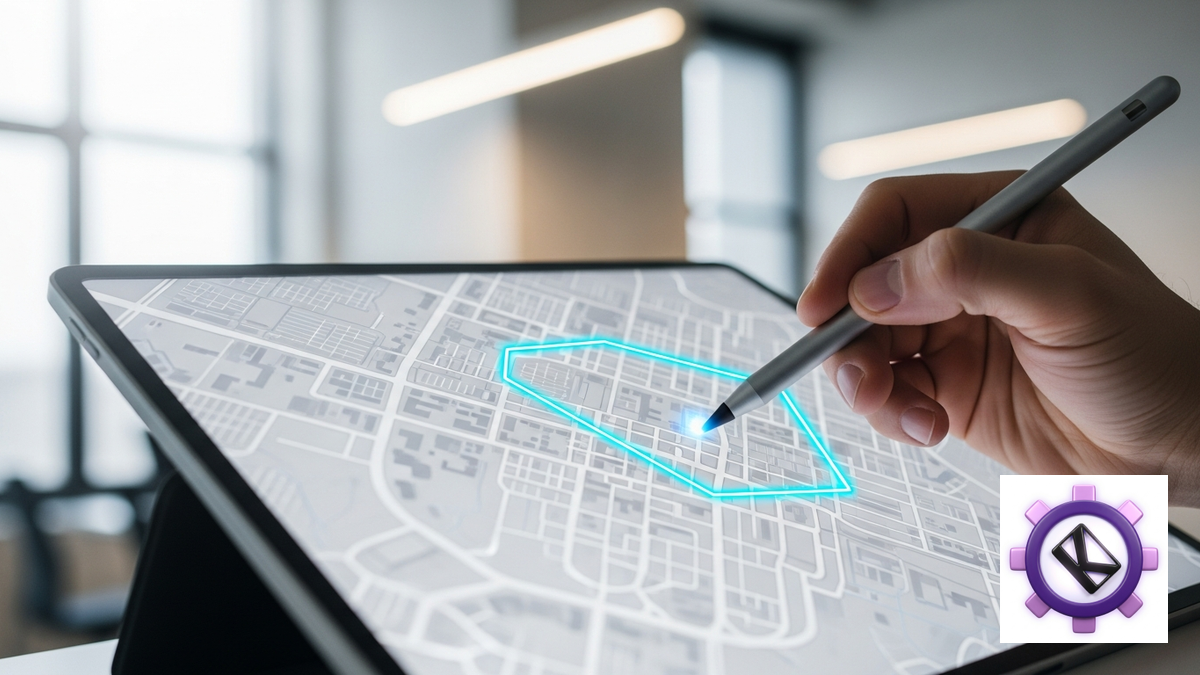
The third is named place or polygon, which sidesteps distance entirely. Zillow is the clearest case here. Across the Zillow help documentation reviewed for this piece there is no numeric radius filter at all. A ZIP code is treated as a region polygon rather than a center point plus a distance, and the platform layers on map bounds plus a Draw tool for a custom boundary, with a matching Remove Boundary action. For real estate that is arguably correct, because a house two miles away across a school district line is not a substitute for a house on your street, and no radius can express that.
Here is how the platforms sort:
| Philosophy | Platforms | What the user supplies | What it optimizes for |
|---|---|---|---|
| Numeric free entry | Indeed API and web, Google Ads, Yelp Fusion API | A number (miles, km, or meters) | Control and precision for operators who know their own geography |
| Fixed buckets | Yelp consumer UI, Nextdoor free Business Post | A choice from a short list, or nothing at all | Removing a decision the user is not equipped to make |
| Named place or polygon | Zillow (ZIP as polygon, Draw tool) | A place name or a drawn shape | Boundaries that matter socially or legally, not geometrically |
| Hybrid, per service | Thumbtack (miles or counties, cities, ZIPs) | Either, chosen per service offered | Businesses whose reach differs by job type |
| Undocumented or unverified | ZipRecruiter (radius_miles parameter) |
Unknown | Not assessable from public sources |
That last row is not filler. ZipRecruiter clearly exposes a radius_miles parameter, but every attempt to fetch its behavior returned a 403, and the partner documentation at ziprecruiter.com is blocked to unauthenticated readers. The parameter exists. Its default, minimum and maximum are unverified, and this piece will not guess at them.
What the platforms actually publish
The table below is the raw comparison, with confidence stated per row, because the quality of these sources varies enormously and pretending otherwise would be useless to you.
| Platform | Options | Default | Min | Max | Confidence |
|---|---|---|---|---|---|
| Indeed (API) | Free numeric radius | 25 mi (documented) | Not stated | Not stated | High. Both indeedlabs/indeed-python and indeedlabs/indeed-php state verbatim: "radius - Distance from search location ('as the crow flies'). Default is 25." |
| Indeed (web) | &radius= URL parameter |
25 mi (observed) | Unverified | Unverified | High on the default. A fetch of indeed.com/jobs with no radius parameter returned internal links that all carried radius=25 |
| Google Ads radius targeting | Free value, miles or km, whole numbers | None | 1 km / 1 mi (privacy floor) | 1,242 mi / 2,000 km, per Studio Help | Partial. The 1 km minimum is official Google Ads Help (1722043). The 1,242 mi figure is official Google but published on Studio Help (7279179), a different product. Ads Help documents no maximum. Also 500 proximity targets per campaign |
| Yelp consumer UI | Bird's-eye View, Driving (5 mi), Biking (2 mi), Walking (1 mi), Within 4 blocks | Bird's-eye View | 4 blocks | Bird's-eye | Medium, third party. These are bounding boxes rather than true radii, on a roughly halving ladder |
| Yelp Fusion API | Free radius in meters | Undocumented, auto-scopes to the location | 0 | 40,000 m (about 25 mi), documented as a suggestion | High, official. The API also returns a distance field in meters and supports sort_by=distance, with best_match as the default |
| Nextdoor Ads | Radius slider | Undocumented | Undocumented | 30 mi | High on the maximum, official |
| Nextdoor free Business Post | Fixed | 2 mi | 2 mi | 2 mi | High, official |
| Thumbtack | Mile radius or counties, cities, ZIPs, set per service | Unverified | Unverified | 150 mi | Medium. The official help article confirms the mechanism verbatim but states no number. The 150 comes from a community thread with staff participation |
| Zillow | No numeric radius filter found | Not applicable | Not applicable | Not applicable | ZIP is treated as a region polygon. Map bounds and a Draw custom boundary are offered instead |
| ZipRecruiter | radius_miles parameter exists |
Unverified | Unverified | Unverified | Low. All fetches returned 403 and the partner documentation is blocked |
Two rows deserve a warning label. The Google Ads maximum of 1,242 miles is real and published by Google, but it comes from the Studio Help center, not the Ads Help center, and product surfaces at Google do not always share limits. Treat it as an indication of scale rather than a hard number you can plan against. The Thumbtack 150 mile ceiling is a community number with staff participation in the thread, which is better than a random blog post and worse than documentation.
The Nextdoor split is the most instructive pair in the table. Paid targeting goes to 30 miles. The free organic post is nailed to 2 miles and offers no control whatsoever. That is not a technical limit, it is a product decision about what free reach is worth.
Why 25 miles holds up as a default
Two independent platforms converge on roughly the same number, which is about as close to corroboration as this category offers. Indeed documents 25 miles as its API default and its web product behaves the same way. Yelp's Fusion API caps radius at 40,000 meters, which converts to just under 25 miles, and calls that ceiling a suggestion rather than a hard rule.
These are different businesses solving different problems. Indeed is matching people to jobs, where the constraint is a daily commute. Yelp is matching people to businesses, where the constraint is a trip somebody is willing to make on purpose. That two products with unrelated economics landed on nearly the same distance suggests the number is tracking something real about how far people will actually travel, rather than one company's arbitrary pick that everyone else copied.
Twenty five miles also survives the sanity check at both extremes better than the alternatives. Set it at 5 miles and you have quietly excluded most of a metropolitan area, including suburbs where a large share of the businesses actually sit. Set it at 100 and you have crossed into a second market with different pricing, different competitors and, in many cases, a drive nobody is making for a routine job. Twenty five sits inside the band where the trip is plausible in most of the developed world.
What it is not is a universal answer, and neither Indeed nor Yelp claims it is. Indeed calls its radius "as the crow flies", which is the precise geometric description and also the reason the number underperforms in places with water, mountains or a single bridge. A 25 mile crow flight across a bay can be a 90 minute drive. Yelp's consumer product works around exactly this by abandoning distance for travel mode, which the next section gets into.
Use 25 as the number you start from and then justify any move away from it. That is a different discipline from picking a number that feels right, and it produces better arguments when somebody asks why your service area is what it is.
Density changes the answer completely
A radius is a container, not a quantity. What matters is how many businesses fall inside it, and that varies by more than an order of magnitude across the same country.
Five miles in Los Angeles contains more businesses than fifty miles in rural Montana. That is not a rhetorical flourish, it is the arithmetic of area times density, and it means a single default radius applied nationally produces wildly different result counts. In the dense case a small radius is already generous and a large one just adds noise from businesses that will never be relevant. In the sparse case a small radius returns nothing, and returning nothing is the worst outcome any search can produce because the user cannot tell whether the answer is "no matches" or "your settings are wrong".
This is why the platforms with the least context set the most conservative numbers. Nextdoor's free Business Post is 2 miles because Nextdoor is built around neighborhoods and can assume density. Yelp's Walking option is 1 mile because a walking search only makes sense where things are close together. Neither would work as a national default for a service business.
The asymmetry matters when you decide which way to err. A radius that is too small fails silently, returning a short list that looks plausible. A radius that is too large fails loudly, returning results that are obviously too far away and easy to discard. Loud failures are cheaper than quiet ones, so when you are unsure, widen.
There is a cost argument here too, and it usually points the same direction. A larger radius costs nothing extra if your system stops once it has enough results and works nearest first, because the far edge of the circle is never reached in a dense area. The extra distance only gets used in sparse areas, which is precisely where you need it. Under those two conditions a generous maximum is a safety net against zero results rather than a spending risk. Google Ads is the exception worth naming, since a wide radius there maps to a bigger auction pool and real money, which is presumably part of why the product enforces a 1 km floor and offers up to 500 separate proximity targets so advertisers can assemble a shape instead of inflating one circle.
Yelp hides the number on purpose
The most interesting finding in this whole comparison is that one company shipped both philosophies at once. Yelp's Fusion API takes a radius in raw meters, returns a distance field in meters on every result, and supports sorting by distance. The number exists, it is precise, and developers get all of it. The consumer interface shows none of it.
Instead consumers get a transport ladder:
| Yelp consumer option | Approximate scope | What the user is actually choosing |
|---|---|---|
| Bird's-eye View | Widest available, the default | No constraint, show me everything nearby |
| Driving | 5 miles | A trip I would take by car |
| Biking | 2 miles | A trip I would take on a bike |
| Walking | 1 mile | A trip I would take on foot |
| Within 4 blocks | Tightest available | Right here |
Note the shape of that ladder. Each step is roughly half the previous one, which is how people perceive distance rather than how maps measure it. Note also that these are bounding boxes rather than true circles, per the third party source documenting them, so the geometry is approximate even before the labels round it off. And note that the default is the widest option, not a middle one, which is the same "err wide" instinct described above.
The insight to steal is that consumers reason in travel time, not miles. Almost nobody knows what 8 miles feels like in an unfamiliar city, but everybody knows whether they are willing to walk. Yelp converted an abstract unit into a decision the user has already made a thousand times, and in doing so removed the failure mode where somebody picks a number they cannot evaluate.
This does not mean numbers are wrong. It means the audience decides. Operators configuring their own service area know their geography and should get a number. Consumers browsing an unfamiliar area do not and should get a mode. Thumbtack effectively splits the difference by letting professionals pick either a mile radius or a set of counties, cities and ZIPs, chosen separately per service, which acknowledges that a business might drive an hour for a big job and ten minutes for a small one.
If you are setting a service radius for your own business, the Yelp trick still works as a private sanity check. Convert your number into a trip and ask whether you would actually make it. If the answer is no, the number is wrong regardless of what the field says.
Related reading
- Anatomy of a buying signal covers the timing side of local targeting, which is the other half of deciding who is worth contacting.
- B2B contact data decay rate explains how fast the records inside your service area go stale.
- Apollo vs ZoomInfo vs Hunter vs Snov compares how the large contact databases handle coverage, which is where geography and data quality intersect.
Frequently Asked Questions
What is a good default service radius?
Twenty five miles. It is Indeed's documented API default, stated verbatim in both the Python and PHP client libraries, and Indeed's web product behaves consistently with it. It also closely matches the 40,000 meter maximum that Yelp's Fusion API suggests, which converts to just under 25 miles. Two unrelated platforms landing on the same figure is stronger evidence than either one alone. Start there and adjust for density.
Is a bigger radius always better?
Not always, but it is usually the safer error. If your search stops once it has enough results and returns the nearest ones first, a wide radius costs nothing in dense areas because the outer edge never gets used. It only comes into play in sparse areas, which is exactly where a narrow radius would have returned nothing. The exception is paid advertising, where a wider radius genuinely expands the auction pool and the spend, which is presumably why Google Ads enforces a 1 km minimum and offers up to 500 separate proximity targets per campaign.
What is the largest radius the major platforms allow?
It depends on the platform and the sourcing is uneven. Nextdoor's advertising documentation states a 30 mile maximum. Yelp's Fusion API documents 40,000 meters, about 25 miles, and describes it as a suggestion. Thumbtack is reported at 150 miles, but that figure comes from a community thread with staff participation rather than the official help article, which confirms the mechanism without stating a number. Google publishes a 1,242 mile maximum, but on Studio Help rather than Google Ads Help, so treat it as an indication of scale rather than a documented Ads limit.
Why does Yelp show walking and driving instead of miles?
Because consumers reason in travel time rather than distance. Yelp's consumer interface offers Bird's-eye View, Driving at 5 miles, Biking at 2 miles, Walking at 1 mile, and Within 4 blocks, and never displays a raw number. The same company's Fusion API exposes a free radius in meters and returns a distance field on every result, so the number clearly exists internally. Yelp simply decided the consumer should not have to evaluate it.
Does ZipRecruiter support radius search?
A radius_miles parameter exists, but its behavior could not be verified for this piece. Every attempt to fetch the relevant pages returned a 403, and the partner API documentation at ziprecruiter.com is blocked to unauthenticated readers. The default, minimum and maximum are unknown. Anyone integrating against it should test empirically rather than rely on secondhand figures.
Why does Zillow not have a radius filter?
Zillow treats geography as regions rather than circles. In the help documentation reviewed here, a ZIP code is handled as a region polygon rather than a center point plus a distance, and the product offers map bounds and a Draw custom boundary tool with a matching Remove Boundary action instead of a numeric field. For real estate that fits the problem, since school districts, city limits and neighborhood lines matter more to buyers than raw distance does.
Last updated July 2026.