Category-Precision Prospecting for Local Leads
Targeting sub-verticals like 'Vegan Restaurant' instead of 'Restaurant' increases lead relevance. Google Maps offers over 4,000 categories for this.
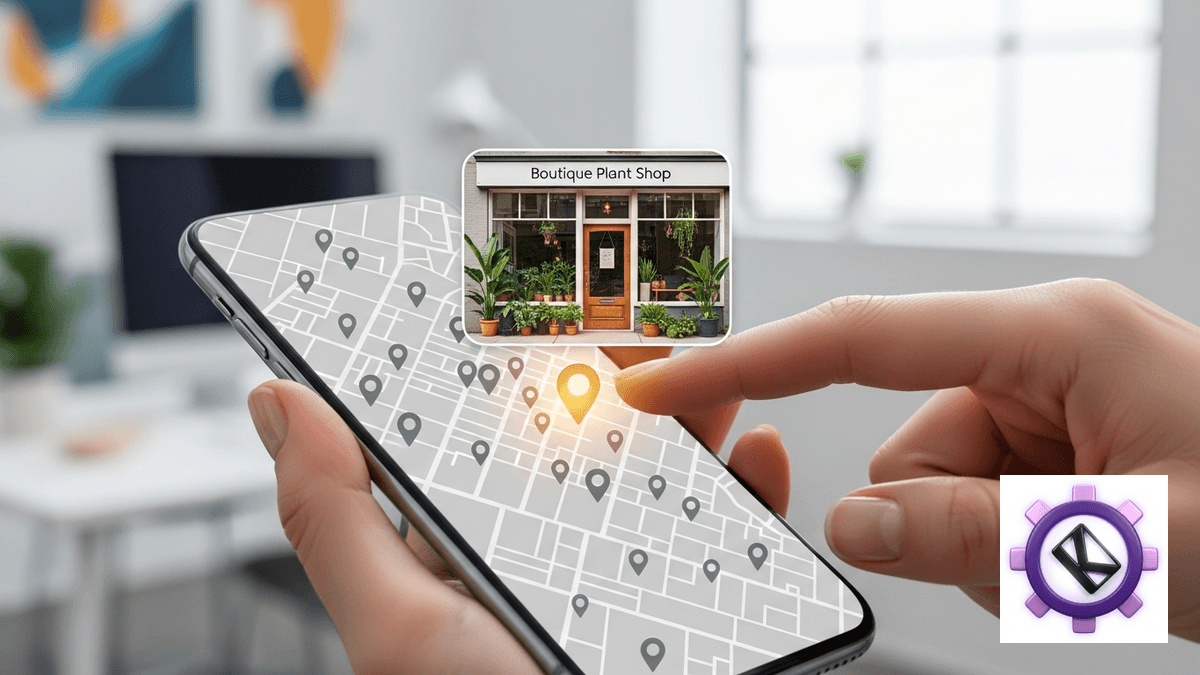
Using Google's Business Profile category taxonomy, which includes over 4,000 distinct business types, allows for category-precision prospecting. [7, 10] This method improves lead relevance by targeting specific sub-verticals, such as 'Peruvian Restaurant' instead of the generic 'Restaurant' category. This granular approach is critical for local lead generation where major data providers like ZoomInfo often lack detailed owner and contact information for small businesses. [11, 17]
TL;DR
- Google's Business Profile taxonomy contains over 4,000 specific categories for granular prospecting. [7, 10]
- Targeted campaigns see conversion rates over 20x higher than broad, untargeted campaigns. [32]
- B2B data providers like Apollo and ZoomInfo often have low contact fill rates for local SMBs, with one test showing mobile match rates as low as 41%. [18, 21]
- A plain-facts lead with a verified email and phone number provides a ~70% deliverability rate for local businesses.
- Effective local prospecting requires filtering by specific Google Business Profile categories, not broad NAICS codes like 722511 for 'Full-Service Restaurants'. [1, 2]
Why Targeting 'Restaurant' Wastes Most of Your Sales Outreach
Relying on legacy industry codes for prospecting is a primary source of wasted sales development resources, particularly for vendors serving specialized markets. The North American Industry Classification System (NAICS) code for 'Full-Service Restaurants,' 722511, officially encompasses an impossibly broad range of businesses, rendering it useless for precise targeting. According to the U.S. Census Bureau's definition, this single category includes everything from full-service bagel shops and diners to pizzerias, fine dining establishments, and steak houses. [1, 5] For a supplier of premium, dry-aged beef or a vendor specializing in high-end point-of-sale systems for complex table service, this classification is fundamentally broken. Lumping a casual doughnut shop in with a Michelin-starred restaurant creates massive list-building inefficiencies. A sales team forced to use this code as their primary filter will spend the majority of their time manually disqualifying irrelevant leads that share a code but have no operational or budgetary similarities to their ideal customer profile. This broad-brush approach ensures that outreach efforts are misaligned from the very first step, forcing sales representatives to sift through a list where the signal-to-noise ratio is overwhelmingly low, a problem that only compounds as outreach begins.
Broad, category-level targeting directly translates into poor engagement and wasted marketing spend, a fact substantiated by multiple recent data analyses. An analysis of billions of B2B cold email interactions in the 2026 a cold-email platform Benchmark Report found that the platform-wide average reply rate was a mere 3.43%, a clear indicator that most generic outreach is ignored. [3] Decision-makers report that the primary reason for ignoring cold emails is a lack of relevance, a problem inherent in campaigns targeting a wide category like 'restaurant' instead of a specific sub-vertical. [4] The financial impact of imprecise targeting was starkly illustrated in a 2024 A/B test on Google AdWords, which compared a hyper-targeted audience against a broad, untargeted one. The broad audience group produced a conversion rate of only 0.2%, a figure more than 20 times lower than the 5% conversion rate achieved by the precisely targeted group. [11] For every 1,000 prospects reached, the broad campaign generated just two conversions, while the specific campaign produced 50. This dramatic difference highlights the direct cost of imprecision; untargeted outreach not only fails to resonate but actively burns budget on unqualified clicks and impressions that will never convert to revenue.
Major B2B data platforms built for corporate sales, such as Apollo.io, are structurally ill-suited for the granular prospecting required to effectively target local small businesses. These platforms primarily build their contact databases by scraping corporate-centric sources like LinkedIn profiles, press releases, and company websites, which works well for identifying employees at established companies with a significant digital footprint. [9] However, this methodology creates critical data gaps when prospecting for main-street businesses, where the owner may not have a LinkedIn profile or a corporate email address. A 2026 review of Apollo.io noted that its data accuracy degrades significantly for smaller companies, a predictable failure pattern for platforms not designed to index the local business ecosystem. [7] For a sales team trying to reach the owner of a single-location salon or an independent plumbing contractor, these databases often return no results or, worse, outdated and inaccurate information. This forces teams into a time-consuming and inefficient workflow of cross-referencing static database records with live sources like Google Maps and state license boards, defeating the purpose of using a data provider in the first place. [21]
How to Use Google's 4,000+ Business Categories for Hyper-Targeted Prospecting
Google's Business Profile platform provides the foundational tool for hyper-targeted prospecting through its detailed taxonomy of business types. As of early 2024, this system includes approximately 4,000 distinct categories, with some sources citing as many as 4,102 as of February 2024. [3] This vocabulary is not static; Google frequently adds, removes, and refines categories to reflect evolving business landscapes, with updates sometimes occurring monthly. [1, 32] This constant evolution ensures that businesses can classify themselves with increasing precision, moving beyond generic labels to ones that capture their core value proposition. For prospectors, this granularity is a critical asset. Instead of targeting a broad and noisy category like "Restaurant," a sales team can focus exclusively on "Pizza restaurant" or even more niche segments like "Palestinian Restaurant" or "European Grocery Store." [6, 10] This level of specificity is the single most important signal a business sends to Google about its core function, directly influencing which searches it appears in and making it a powerful filter for identifying qualified local leads. [10, 13] This precision stands in stark contrast to the often-limited firmographic data available for small, local businesses in major B2B databases.
Selecting the most specific primary category is the highest-impact action a business can take to improve its ranking in Google's coveted Local 3-Pack and on Google Maps. [10, 13, 32] According to a 2025 analysis by Ranking By SEO India, nearly 42% of local searchers click on one of the top three map results, making this placement essential for driving foot traffic, calls, and website visits. [7] The primary category acts as the main relevance signal for Google's local algorithm, which determines which businesses best match a user's query. [4, 11] Choosing a specific category like "Nail salon" instead of the broader "Beauty salon" makes a business eligible to appear for high-intent searches like "nail salon near me." [5, 10] This direct correlation between category specificity and search visibility is why it is considered the top ranking factor within a business owner's control. [13] A 2023 study by DAC that analyzed 1,050 business locations found that utilizing additional, specific categories led to a substantive increase in average map rankings, with some restaurants seeing a 17% increase in customer actions in the first month. [18]
A business can strategically use up to ten categories, consisting of one primary category and nine additional ones, to capture the full scope of its offerings without diluting its core focus. [3, 6] The primary category should always represent the main, most profitable, and most specific aspect of the business, as this choice carries the most weight in Google's ranking algorithm. [5, 15] The additional nine categories function as secondary signals, helping the business appear in related but more niche searches. [6] For example, an "Italian Restaurant" (primary category) could add "Pizza Restaurant" as a secondary category to capture that specific customer segment. [6, 19] However, experts caution against "category stuffing." The 2026 best practice is to use only two to four highly relevant secondary categories that represent distinct services people actually search for. [10, 13, 14] Adding too many can dilute the authority of the primary category, confusing Google's algorithm and potentially harming rankings. [12] The Services and Products sections of the profile are the proper place to list every specific capability, like "drain cleaning" for a business whose primary category is "Plumber." [12]
| Prospecting Dimension | Broad Category Approach (e.g., 'Restaurant') | Category-Precision Approach (e.g., 'Peruvian Restaurant') | Lead Quality Outcome | Supporting Data Point |
|---|---|---|---|---|
| Targeting Specificity | Low; captures all restaurant types, including irrelevant ones. | High; isolates a specific, uniform sub-vertical. | Improved Relevance | Google's taxonomy has ~4,000 categories for precise targeting. [3, 5] |
| Message Personalization | Generic messaging about 'improving restaurant operations.' | Tailored messaging about sourcing pisco or aji amarillo. | Higher Engagement | Hyperlocal email campaigns can achieve a 21% conversion rate. [20] |
| Local SEO Signal | Weak; competes with every other restaurant in the area. | Strong; aligns with a primary local ranking factor for a specific niche. [13] | Increased Visibility | 42% of local searchers click on a result from the Google 3-Pack. [7] |
| Sales Conversion Rate | Low; outreach is less relevant to the prospect's specific needs. | High; solves a niche-specific problem the prospect faces. | Higher Close Rate | SEO-driven leads have a 14.6% close rate versus 1.7% for outbound. [21] |
| Wasted Outreach | High; sales reps spend time contacting poor-fit businesses. | Low; every prospect fits the ideal customer profile for the specific campaign. | Improved Sales Efficiency | Using specific categories avoids dilution and focuses on core services. [12, 14] |
| Competitive Landscape | Extremely high; competing against all food establishments. | Lower; focused competition within a specific cuisine or service type. | Greater Market Penetration | Competitor category analysis is a key strategy for finding opportunities. [3, 32] |
The Local Data Gap: Why ZoomInfo and Apollo Can't Find the Pizzeria Owner
Major B2B data providers' claimed accuracy for contact information often fails to hold up under independent scrutiny, creating a significant challenge for local prospecting. A March 2026 head-to-head test of 1,000 B2B leads revealed a notable gap between advertised and actual email deliverability, with ZoomInfo achieving 84% accuracy and Apollo hitting 78%. While these figures may seem high, a 16% to 22% bounce rate is untenable for any serious outreach campaign, risking sender reputation and wasting significant resources. Another independent test from March 2026, which involved manually spot-checking 100 contacts from a larger 500-contact sample, found similar results: 92% deliverability for ZoomInfo and 88% for Apollo. The core issue is that these platforms, including ZoomInfo SalesOS and the Apollo Professional plan, are engineered for scale across enterprise and mid-market accounts, not for the granular, often-changing data of small local businesses like pizzerias or contractors. Their data acquisition models, which rely on web scraping, user contributions, and large-scale partnerships, are less effective at capturing the owner's direct email at a single-location restaurant than they are at finding a VP of Marketing at a Fortune 500 company.
The data accuracy problem becomes even more acute when examining phone numbers, a critical channel for local lead generation where a direct call can be the most effective first touchpoint. Independent testing from March 2026 highlights a stark difference in mobile number coverage, with a 1,000-lead benchmark showing ZoomInfo found a mobile number for 67% of contacts, while Apollo's mobile match rate was only 41%. This 26-point gap directly impacts a sales team's ability to connect with decision-makers. Another analysis from June 2026 confirmed this disparity, noting ZoomInfo's clear win on phone data with approximately 67% mobile match and 61% direct-dial accuracy, compared to Apollo's 41% and 43% respectively. This performance gap is a direct result of platform architecture; providers like ZoomInfo and Apollo are primarily designed for enterprise and mid-market prospecting, where corporate directories and predictable job title hierarchies are common. For local businesses, where the owner might also be the manager and primary operator, such structured data is rare, leaving a significant void that these large-scale platforms cannot consistently fill.
The fundamental design of major B2B intelligence platforms is misaligned with the realities of the local small business market, which is dominated by categories like restaurants and home services. ZoomInfo, for instance, serves over 35,000 companies, including 30% of the Fortune 500, and its platform is built to provide deep insights into complex enterprise organization structures. Its features, such as advanced filtering by department, seniority, and intent signals from its Bombora integration, are optimized for selling into large corporations. Similarly, Apollo.io, while more accessible to SMBs, still frames its value around segmenting prospects by criteria like funding stage, technologies used, and company size, attributes more relevant to tech startups and mid-market firms than to a local pizzeria. An analysis of companies using ZoomInfo shows a heavy concentration in software development (18%) and IT services (11%), with the most common customer size being 51-200 employees (37%). This focus on larger, more structured companies means their data collection and verification processes are not optimized for the millions of small, local businesses that form the backbone of local economies, creating the data gap that category-precision prospecting aims to solve.
Contact data for small businesses becomes outdated far more rapidly than for enterprise accounts due to higher turnover and structural instability, a problem that static databases are ill-equipped to handle. The established benchmark for B2B contact data decay is 2.1% per month, which compounds to 22.5% annually, meaning nearly a quarter of a database becomes inaccurate each year. However, recent analyses from late 2024 suggest email decay specifically has accelerated to a rate of 3.6% per month. This decay is particularly severe for small businesses. While some data suggests larger enterprises have higher turnover rates, other sources indicate that businesses with fewer than 50 employees can face an average turnover rate as high as 51.5%. This constant churn of personnel, combined with the fact that job titles themselves change at a rate of 65.8% annually, means that a purchased list of local business contacts can become substantially obsolete within a single quarter. For a local lead generation strategy to be effective, it cannot rely on data that is refreshed quarterly or annually; it requires a system that can access real-time, publicly available information, bypassing the inherent decay of platforms like ZoomInfo and Apollo.
Case Study: Quantifying the Impact of Precision Targeting
Quantifying the financial return of precision prospecting reveals a stark contrast between targeted and broad-based campaigns. A 2024 A/B test analysis from Primer, a B2B audience platform, demonstrated that hyper-targeted search ad campaigns can achieve a 5% conversion rate, a figure dramatically higher than the 0.2% conversion rate seen in parallel untargeted campaigns. [10] This efficiency translates directly to profitability. The same study, which involved equal ad spends of approximately $1,100 for both strategies, found that the targeted approach generated a positive return on ad spend (ROAS) over 4.5 times higher than the broad, untargeted campaign, which failed to produce any return at all. [10] This financial uplift occurs because category-precision prospecting eliminates spend on irrelevant audiences, concentrating budget on profiles most likely to convert. While broad targeting may generate more initial impressions and clicks, these top-funnel metrics often fail to correlate with bottom-funnel results like attributable revenue. As detailed in a 2026 guide from ClickGuard, strategies like Target ROAS (tROAS) in Google Ads are designed specifically to optimize for conversion value, automatically bidding higher on searches more likely to meet profitability goals, which inherently favors a well-defined audience. [17]
The performance disparity extends decisively into email outreach, where smaller, more relevant campaigns significantly outperform large, generic blasts. According to 2026 benchmark data from an analysis of over 16.5 million emails, campaigns sent to fewer than 50 highly-targeted recipients achieve an average reply rate of 5.8%. [2] In stark contrast, large-scale campaigns directed at over 1,000 prospects see this rate plummet to just 2.1%. [1, 2] This more than two-fold increase in engagement underscores the value of meticulous list-building, a core tenet of category-precision prospecting. When a sales team moves from a generic category like 'Restaurant' to a micro-segment such as 'Michelin-Starred French Restaurants in Boston', the messaging can be hyper-personalized, addressing specific challenges and opportunities relevant to that niche. This level of relevance is critical, as a staggering 71% of non-responders cite irrelevance as the primary reason for ignoring a cold email. [1] A 2026 analysis by Mailforge confirms that such personalization is a key differentiator, with tailored emails seeing a 32% higher response rate compared to generic templates. [1] This data collectively validates that a smaller, well-defined audience is far more valuable than a vast, undifferentiated one.
Utilizing specific Google Business Profile (GBP) categories is a direct and measurable method for improving local search rankings for desired service keywords. Instead of relying on a single, broad category like 'Landscaper', a business can add multiple, more descriptive secondary categories such as 'Landscape Designer', 'Lawn Care Service', and 'Retaining Wall Supplier'. This granular classification provides critical relevance signals to Google's local search algorithm. A 2023 study of 1,050 business locations confirmed that businesses using one or more additional, specific categories saw a higher average map ranking than those that did not. [5] For example, auto part dealers saw a 22% increase in leads after adding 'tool rental' as a secondary category, and restaurants have seen up to a 17% increase in user actions by adding categories for their specific cuisine types. [5] As explained in a guide by DMX Marketing, Google uses GBP category information to directly match the relevance of a business to a user's search query, making specificity a primary lever for ranking. [19] This optimization is not theoretical; it directly translates to appearing in more relevant local pack results, driving qualified traffic for the exact services a business offers.
| Metric | Broad-Category Approach | Category-Precision Approach | Quantitative Impact | Data Source / Vendor (Year) |
|---|---|---|---|---|
| Ad Conversion Rate | 0.2% | 5.0% | 25x higher conversion rate | Primer (2024) [10] |
| Return on Ad Spend (ROAS) | Negative / No Return | >4.5x Positive Return | Over 450% greater return on ad spend | Primer (2024) [10] |
| Cold Email Reply Rate | 2.1% (for lists >1,000) | 5.8% (for lists <50) | 176% higher reply rate on small, targeted lists | Belkins / Mailforge (2026) [1, 2] |
| Local Search Relevance | Ranks for 'Landscaper' | Ranks for 'Landscape Designer', 'Retaining Wall Supplier' | Up to 22% increase in leads from secondary categories | DAC Group (2023) [5] |
| Lead Quality | Low; high volume of unqualified traffic | High; traffic aligns with Ideal Customer Profile (ICP) | Eliminates wasted spend on non-converting clicks | Primer (2024) [10] |
| Personalization Impact | Generic messaging | Tailored messaging for sub-vertical | 32% higher response rate for personalized emails | Mailforge (2026) [1] |

A Modern Local Lead Is Verifiable Data, Not a Vague Score
An actionable local lead is not an abstract score or a vague signal; it is a collection of verifiable facts that enable direct engagement. A modern lead consists of a specific business name, the confirmed owner's name, a verified email address with a real-time deliverability check, and a direct-dial phone number. Unlike opaque AI-generated narratives or arbitrary 'fit scores' that often obscure the underlying data quality, a fact-based lead provides confidence through transparency. [12, 14] For instance, knowing a lead's email was verified at the moment of export is fundamentally more valuable than a lead scored highly based on black-box behavioral analytics, such as a model that overweights email opens without understanding the context of the buyer's journey. [18, 20] This focus on concrete, verifiable information is critical, as it allows sales teams to spend their time on outreach rather than on data validation, ensuring that every call and email has a legitimate chance of reaching its intended target. [19] The core purpose of data verification is to ensure the information you have is accurate and reliable, forming the foundation of any successful outreach campaign. [11]
Relying on verified data is a strategic necessity due to the rapid and costly decay of B2B contact information. Industry benchmarks, validated by sources like Dun & Bradstreet and HubSpot's Database Decay Simulation, show that B2B contact data decays at a rate of 2.1% per month, compounding to 22.5% annually. [2, 4] This means that within a single year, nearly a quarter of a typical B2B database becomes materially inaccurate, leading to bounced emails, failed calls, and wasted sales efforts. [4] Some data points decay even faster; phone numbers can change at a rate of 25% to 35% per year, while job titles can see a staggering 65.8% annual change. [4, 5] This relentless degradation, driven by job changes, company acquisitions, and office relocations, costs U.S. businesses an estimated $3.1 trillion annually in poor data quality. [2, 5] The financial impact on individual companies is also severe, with organizations losing an average of $12.9 million each year due to inaccurate contact information. [1, 6] Without a process for continuous verification, sales and marketing teams operate on a foundation of outdated information, significantly undermining pipeline forecasts and campaign effectiveness.
Fact-based prospecting provides confidence by aligning vendor incentives with customer outcomes, a stark contrast to platforms that offer ambiguous metrics without guarantees. When a provider offers bounce credits for undeliverable emails, they are putting their own revenue on the line to back up their data quality claims. For example, the vendor UpLead, founded in 2017, built its market reputation on this principle by offering a 95% data accuracy guarantee and crediting customers back for any contacts that fall below that threshold. [3, 9] This model, which leverages real-time email verification at the moment a contact is unlocked, ensures users only pay for data that works. [8, 10] This stands in opposition to systems that provide AI-generated 'fit scores' or predictive models which can be compromised by messy or incomplete CRM data, leading the AI to make confident but incorrect guesses. [14] A policy where credits never expire, such as that offered by vendors like Bouncer or MailValid, further strengthens this alignment, ensuring that businesses are not penalized for slower usage cycles and only invest in data that is verifiably accurate and actionable. [26, 28]
How to Implement Category-Precision Prospecting Today
Implementing category-precision prospecting begins with a forensic analysis of your ideal customers' digital footprints, specifically their Google Business Profiles (GBP). The initial step is to identify the 5 to 10 most specific GBP categories that perfectly encapsulate your target market by reverse-engineering the profiles of your existing best customers and direct competitors. [3, 7] Tools like the GMB Everywhere Chrome extension or manual inspection of a webpage's source code can reveal not just the primary category a business uses, but also the crucial secondary categories that help them appear in more niche searches. [5] For instance, a marketing agency targeting high-end restaurants would move beyond the generic "Restaurant" category to identify and list sub-verticals like "Fine Dining Restaurant," "Steak House," or "Seafood Restaurant." This process, as detailed in guides like Local Search Fuel's competitor analysis breakdown, is not about blind imitation but strategic differentiation. [3] By compiling a list of these hyper-specific categories, which now number over 4,000 as of May 2026, you create a precise targeting map that aligns your outreach efforts with the exact services and identities of your ideal local prospects. [10] This foundational research ensures that subsequent prospecting efforts are focused, relevant, and far more effective than broad, industry-level campaigns.
Once you have identified the precise Google Business Profile categories, the next step is to leverage a search tool that can query this granular data directly, bypassing the inaccuracies of broader NAICS or SIC code lookups. Modern local lead generation platforms, such as those offered by Scrap.io or Oppora AI, are specifically designed to scrape Google Maps using these exact category and location inputs, transforming the platform into a rich prospecting database. [1, 12] This approach is critical because B2B data decay is a severe and costly problem; various studies and reports from 2025 and 2026 indicate that contact data degrades at an astonishing rate of 22.5% to 70.3% annually. [2, 18] This rapid decay, with email addresses alone decaying at 3.6% per month as of late 2024, costs U.S. businesses trillions and renders a significant portion of traditional databases useless. [2, 21] To combat this, leading platforms integrate real-time email verification, a crucial feature that validates contact information at the moment of capture. [6, 43] As noted in Validity's 2025 State of CRM Data Management report, which surveyed 602 users, 37% of organizations lose revenue directly due to poor data quality, making the prioritization of platforms with built-in verification and owner-specific contact enrichment an essential part of any modern prospecting strategy. [15] These tools, like the Google Maps Lead Generation platform from Clay, combine scraping with waterfall enrichment to ensure the data is not only specific but also current and actionable. [17]
The final step in operationalizing category-precision prospecting is to de-risk the investment in higher-quality local data by choosing a platform with flexible billing and avoiding long-term lock-in. The local lead generation market is filled with tools that have varying pricing models, from one-time fees for data extraction to recurring subscriptions. [32] Given the dynamic nature of local markets and the need to test different niche categories, a month-to-month billing structure provides the agility to pivot strategies without being penalized by an annual contract. This flexibility is a key trend highlighted in analyses of modern SaaS pricing, where high-growth providers are increasingly adopting usage-based and monthly models to align cost with value. [23, 34] For example, a Gartner report from April 2024 noted that high-growth SaaS companies are more likely to use monthly and consumption-based pricing. [34] This model is particularly advantageous when the Return on Investment (ROI) of sales efforts is under constant evaluation. [27] Platforms like Stripe Billing and Chargebee have enabled more software vendors to offer these flexible options, which are critical for small businesses and sales teams that need to justify every dollar of their tech stack spend. [28, 20] By selecting a tool with a flexible subscription, you can test the efficacy of targeting hyper-niche categories, measure the ROI directly, and scale your investment only after the strategy proves profitable, ensuring your prospecting budget is spent on what actually works.

Related reading
- see our 12 tips for selling to the c suite analysis
- see our 2024 b2b intent data benchmarks analysis
- see our analyze crm hygiene analysis
- see our anatomy of a buying signal analysis
Frequently Asked Questions
What is category-precision prospecting?
Category-precision prospecting is a lead generation method that targets businesses using their specific Google Business Profile category instead of a broad industry. This approach improves relevance by focusing on a narrow sub-vertical, such as 'Commercial Printer' instead of just 'Printer.' Since a business's chosen category directly influences its visibility in local search, targeting by category connects you with prospects who are actively trying to attract a specific type of customer. [20] This granular targeting is more effective because it aligns outreach with the precise services a business offers to the public. [7]
How many business categories does Google Maps have?
Google's Business Profile taxonomy contains just over 4,000 distinct categories. As of May 2026, the official count was 4,046 categories, a number that Google updates frequently by adding, removing, or renaming options. [7] This extensive list includes highly specific business types like 'Cold Noodle Restaurant' and 'Canoe & Kayak Rental Service,' allowing businesses to accurately describe their core services. [7] This granularity is what enables precision prospecting by moving beyond generic labels like 'Restaurant' to find specific customer profiles. [11]
Why is targeting local businesses difficult with traditional B2B databases?
Targeting local businesses is difficult with traditional B2B databases because their data architecture is designed for enterprise companies, not small businesses. Major vendors build their databases by indexing corporate sources like LinkedIn profiles and official org charts, which most local businesses do not have. [1] This results in massive coverage gaps; one analysis found that these tools miss 90% of small businesses, having zero contacts for a local plumber while holding detailed records for a large tech company's employees. [1] Consequently, data providers like ZoomInfo often have lower accuracy for small businesses, leading to high email bounce rates and disconnected phone numbers. [15, 18]
What is the difference between a NAICS code and a Google Business Profile category?
The primary difference is their purpose and audience. A NAICS code is a six-digit number used by government agencies for statistical tracking of economic activity, grouping businesses by their production-oriented primary function. [26, 27] In contrast, a Google Business Profile category is a customer-facing label that a business chooses to influence how it appears in local search results on Google Maps. [25] While a restaurant may fall under a single broad NAICS code for food service, it can choose from dozens of Google categories like 'Pizza restaurant' or 'Vegan restaurant' to attract specific diners, making Google's system more useful for market-driven prospecting. [7, 27]
What is a good email reply rate for local business outreach?
A good email reply rate for local business outreach is between 5% and 10%. [3, 6] Specific studies from 2026 show that outreach to small businesses with under 50 employees achieves a 7% average response rate, which is higher than the 3-5% average for general B2B campaigns. [5] This higher receptiveness is because smaller, growing companies are often more open to unsolicited proposals. Campaigns that achieve reply rates over 10% are considered excellent, typically resulting from highly targeted lists and personalized messaging. [3]
Last updated: July 2026